Can be mineral or organic compounds. Divalent cations, dicarboxylic acids, bloom, good info from the abundant medical literature on urine and kidney stones,
==============================
Cheese – it’s basically concentrated milk, after the whey is drained off. Several problem compounds can separate out when their concentration is increased. Potentially there can be calcium phosphate, calcium lactate, calcium citrate, lactose, calcium sulfate (an anti-caking agent added to shredded cheese), Rochelle salts (a tartrate salt sometimes used as a processing aid). Lactose forms characteristic wedge-shaped crystals. Most lactose is removed with the whey (which also removes water and the non-casein proteins) and so it doesn’t happen much with regular cheese.
==============================
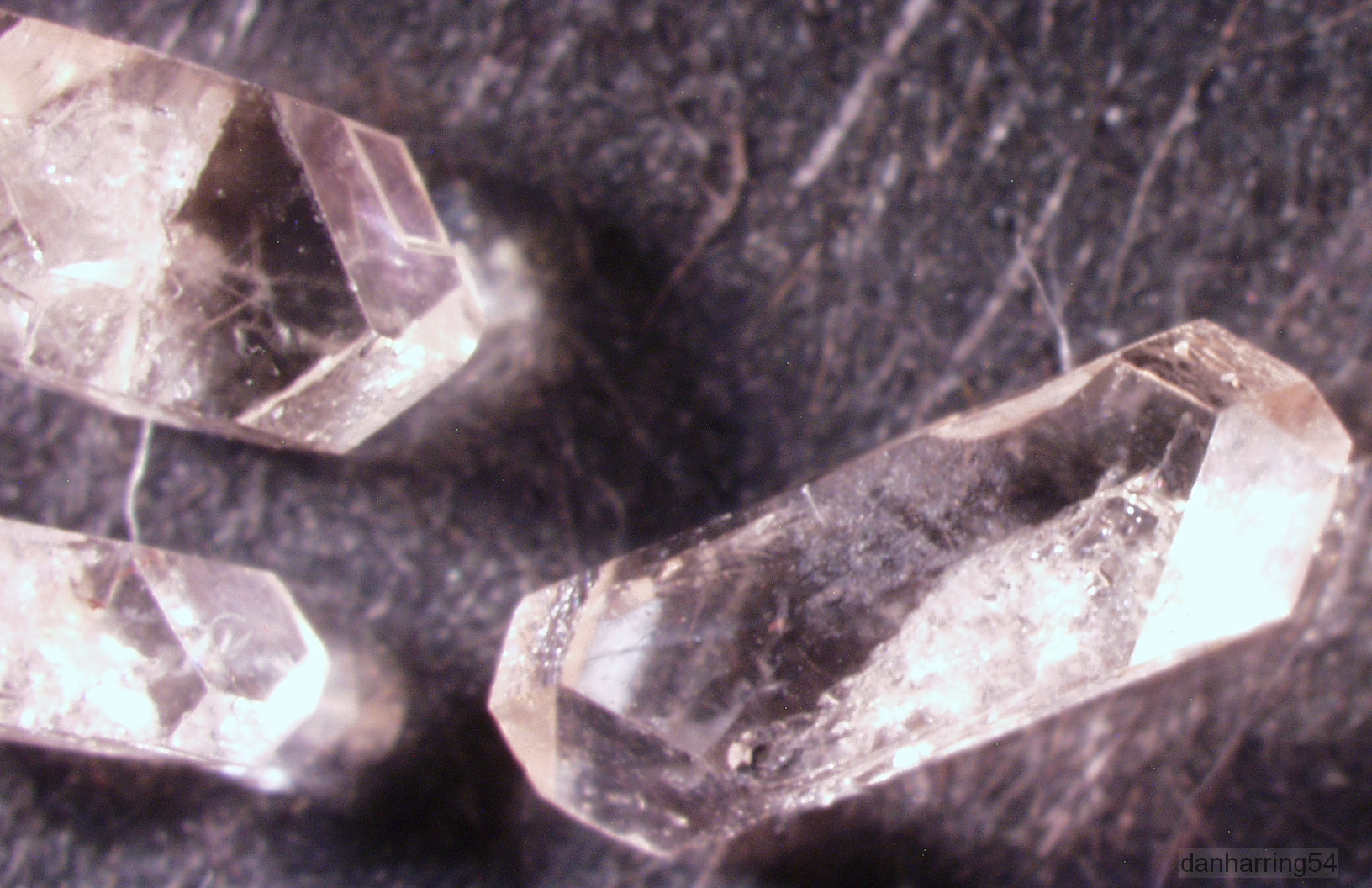
Grape juice – Tartaric acid is a 4 carbon dicarboxylic acid, and the middle carbons are hydroxylated (2,3-Dihydroxybutanedioic acid). Potassium bitartrate is the most common type; calcium tartrate also occurs.

==============================
Canned fish – magnesium ammonium phosphate hexahydrate (struvite)
Minerals in water (calcium carbonate)
Chocolate fat bloom
Oxalic acid (the small 2 carbon -dioic acid)
Isolated incidents – caffeine in instant coffee, sugar free pudding (unmixed ingredient),
==============================
Caffeine crystals in instant coffee
This is a rarely seen phenomenon that apparently involves sublimation during the vacuum freeze drying process. Some manufacturers say that fluctuations in storage temperature can contribute.

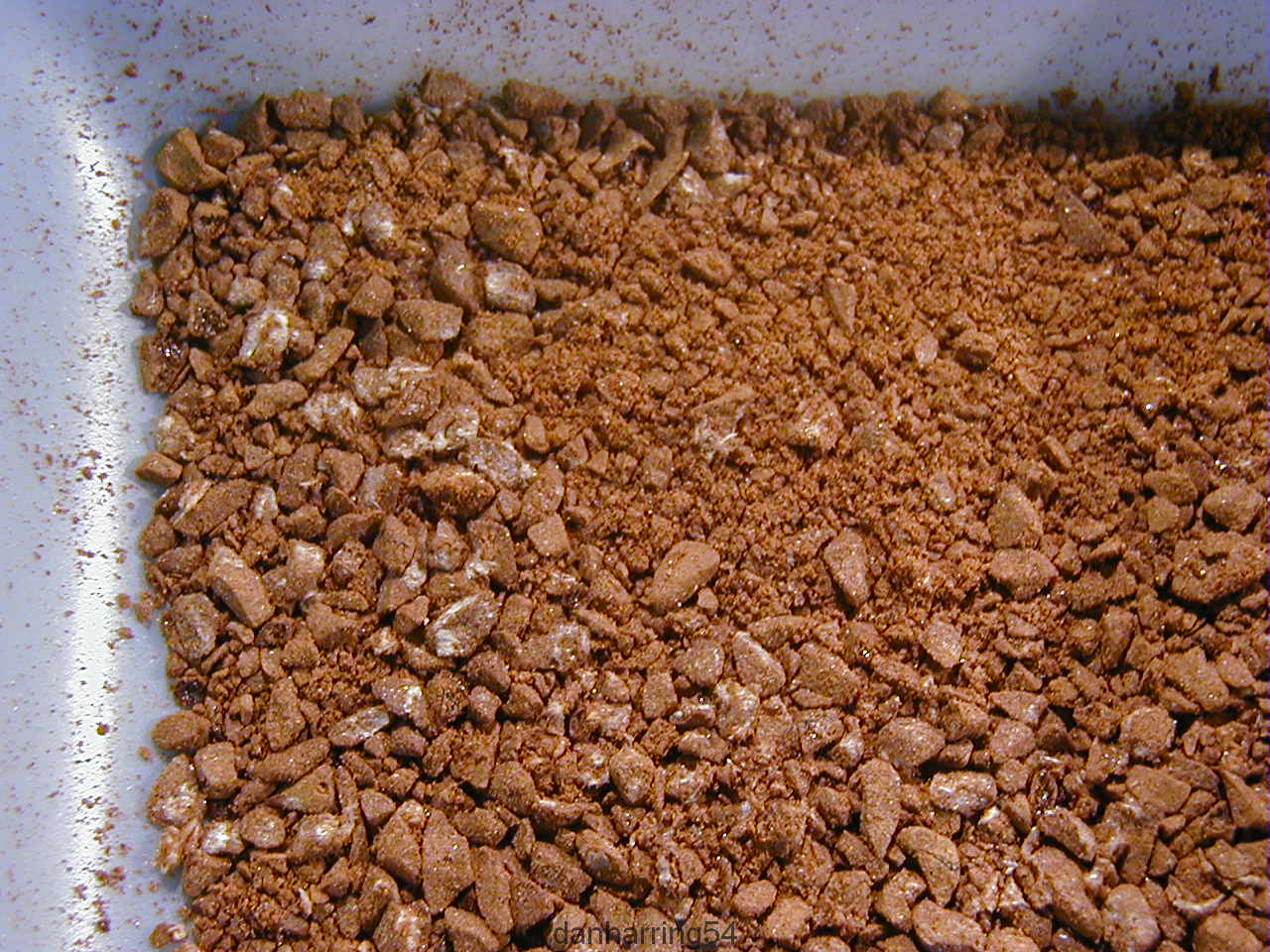
Below: My second camera had better Macro, but didn’t get the color right under the poor indoor lighting (Nikon CP995)


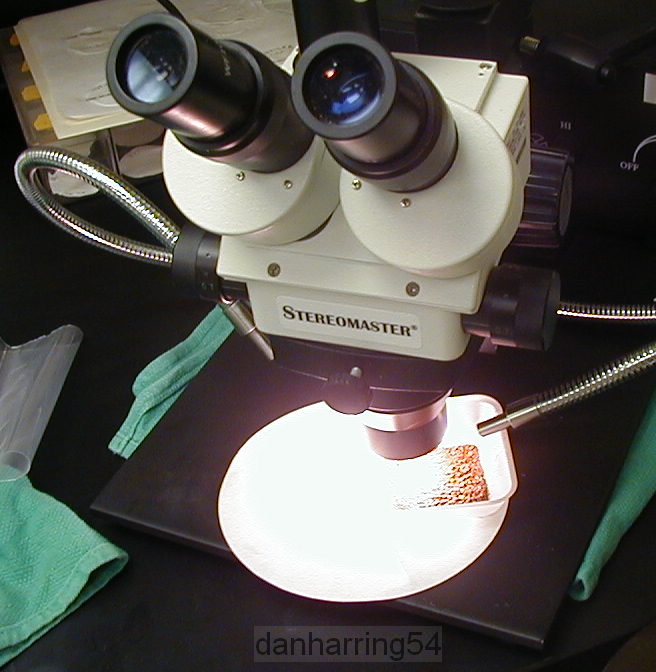
(I had to manually hold an early model digital camera up to the microscope eyepiece, and so the depth of field and sharpness aren’t the best)


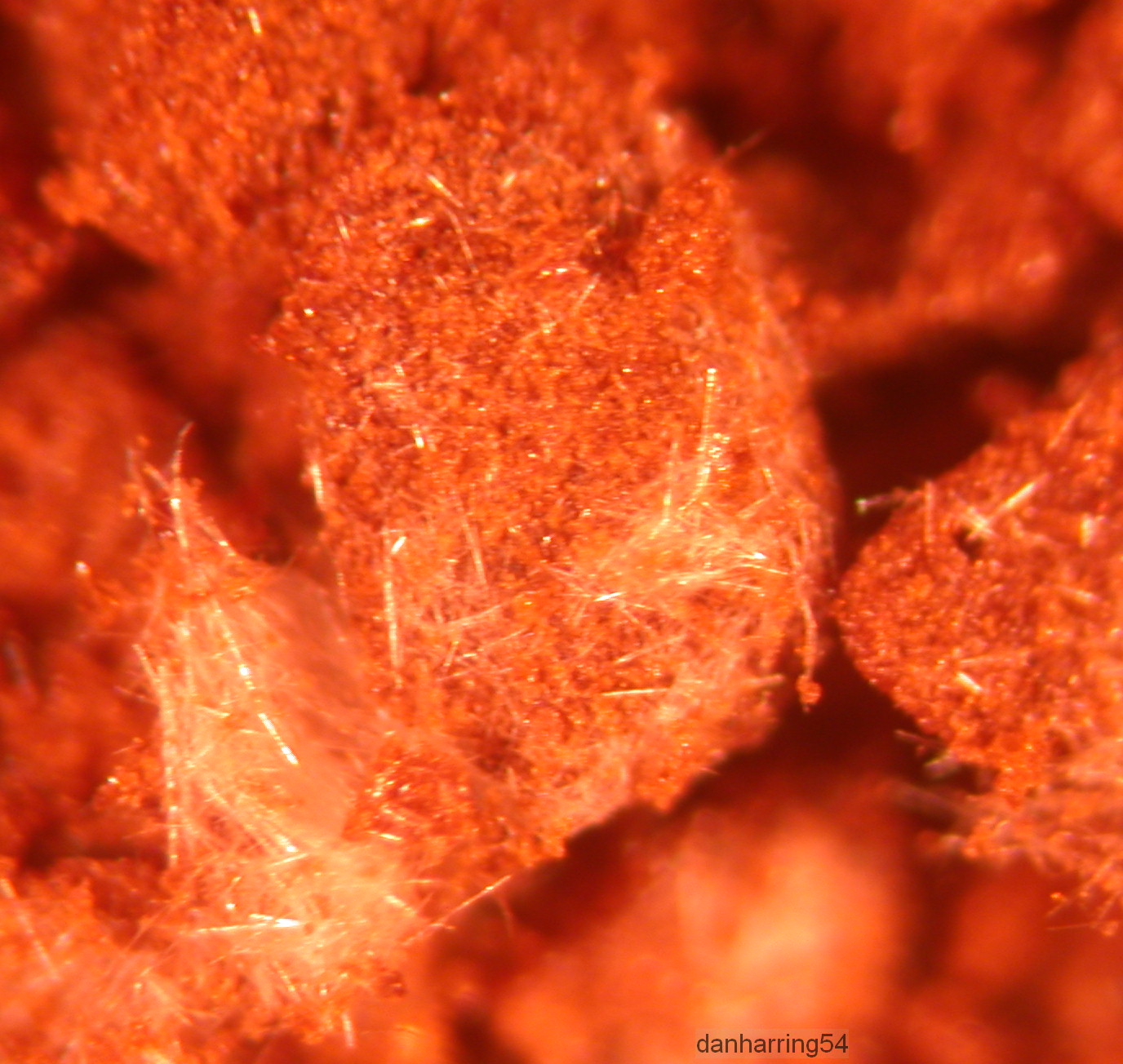
Clearly, these needle shaped crystals are not mold.
 Dan Harring (54)