This was the favorite part of my job – investigating something that sounded terrible, but turned out to have a reasonable explanation

Sprout, not maggot. Someone eating chili found what they thought were maggots. It turned out to be from beans that had sprouted. The biggest one in the photo is one half inch long.


Defective or watered-down beer
In the past, the crimped metal crown caps on some 12 ounce glass bottles could be twisted off and then twisted back on securely without leaving any visual evidence. Apparently an underage kid helped himself to beer kept in the house, then refilled the bottles with water and replaced the caps. Later, Dad opened a bottle and detected an unusual taste and a sulfur smell. Closer exam in the lab showed the bottles weren’t filled to the exact same level, as would happen at the brewery. Chemical exam showed the diluted contents were less than 10% beer. The remaining ingredients started to spoil after the tampering (mouth backwash, non-sterile tap water and access to oxygen after the carbonation was gone). The Coors representative who communicated with me seemed to have dealt with this many times. Their lab could detect if it was their own (“brewed with pure Rocky Mountain”) spring water based on the anion content. I believe they would also look at other analytes and parameters if necessary.

Mold or scum on jar of baby food
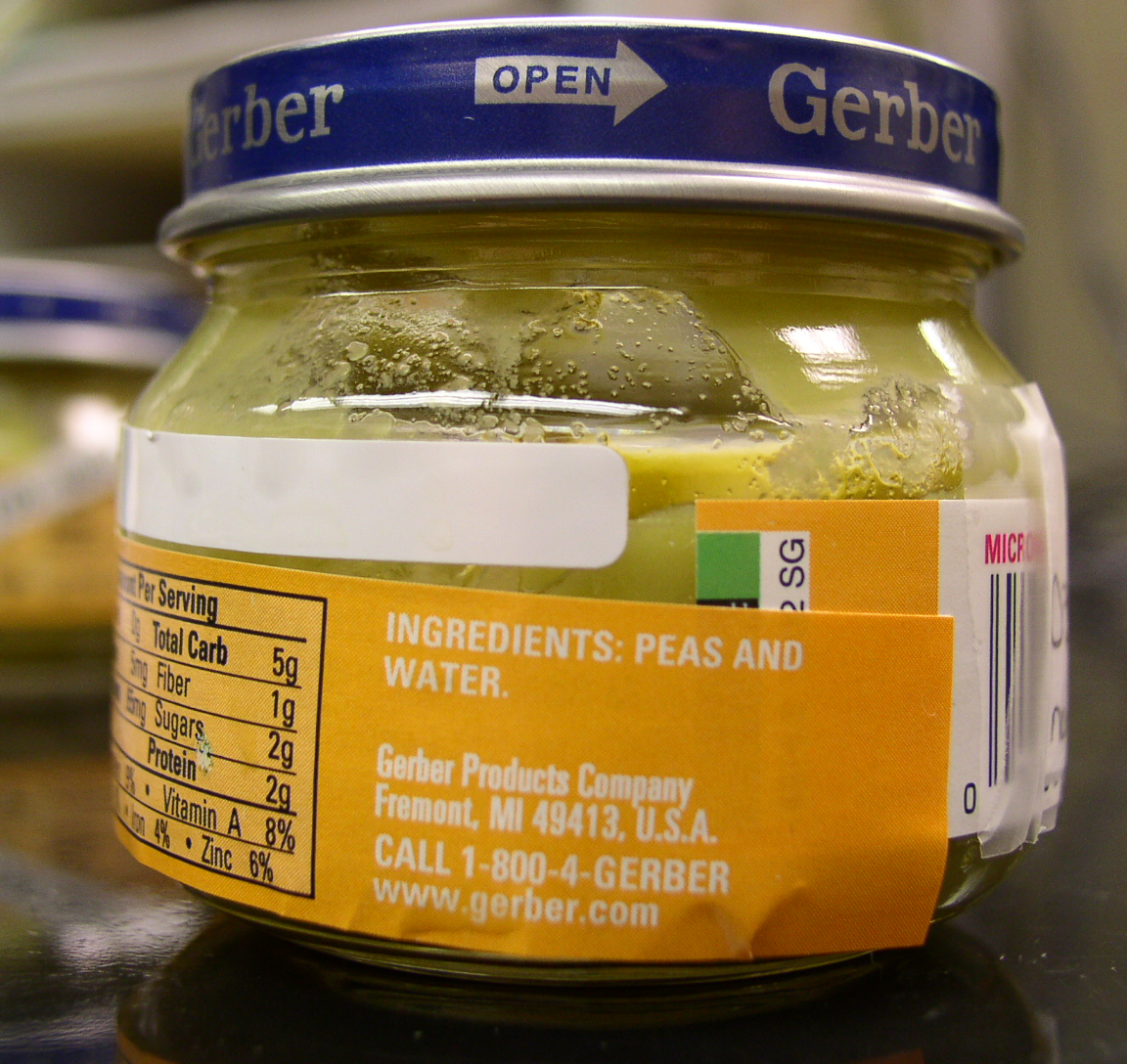
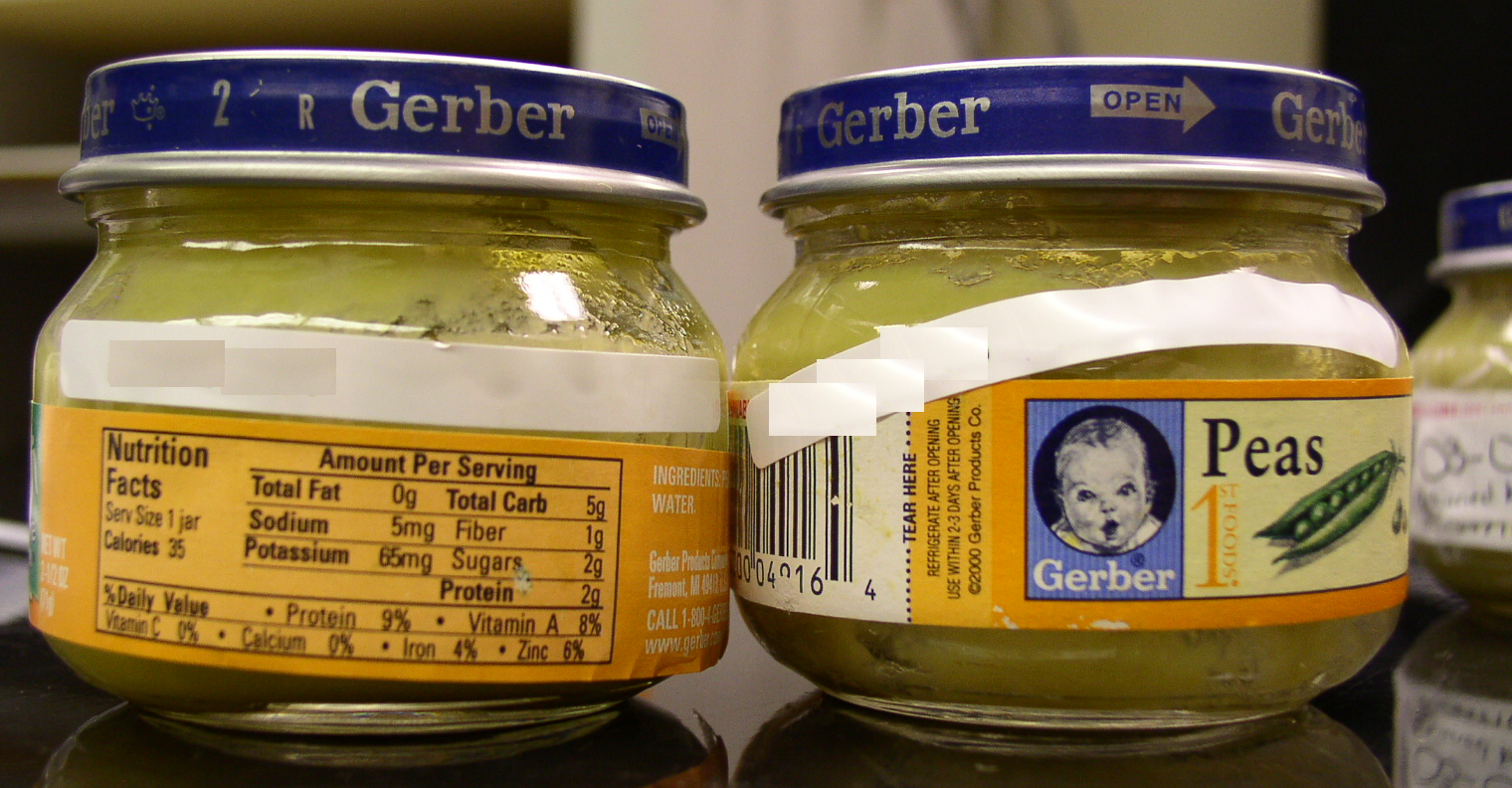
Several jars of Gerber’s baby food (peas) were sent for mold testing. A mother reported feeding her baby and the baby spit out the peas. (Imagine that, a baby spitting out peas!) Mother noticed white specks, and later the baby became sick.
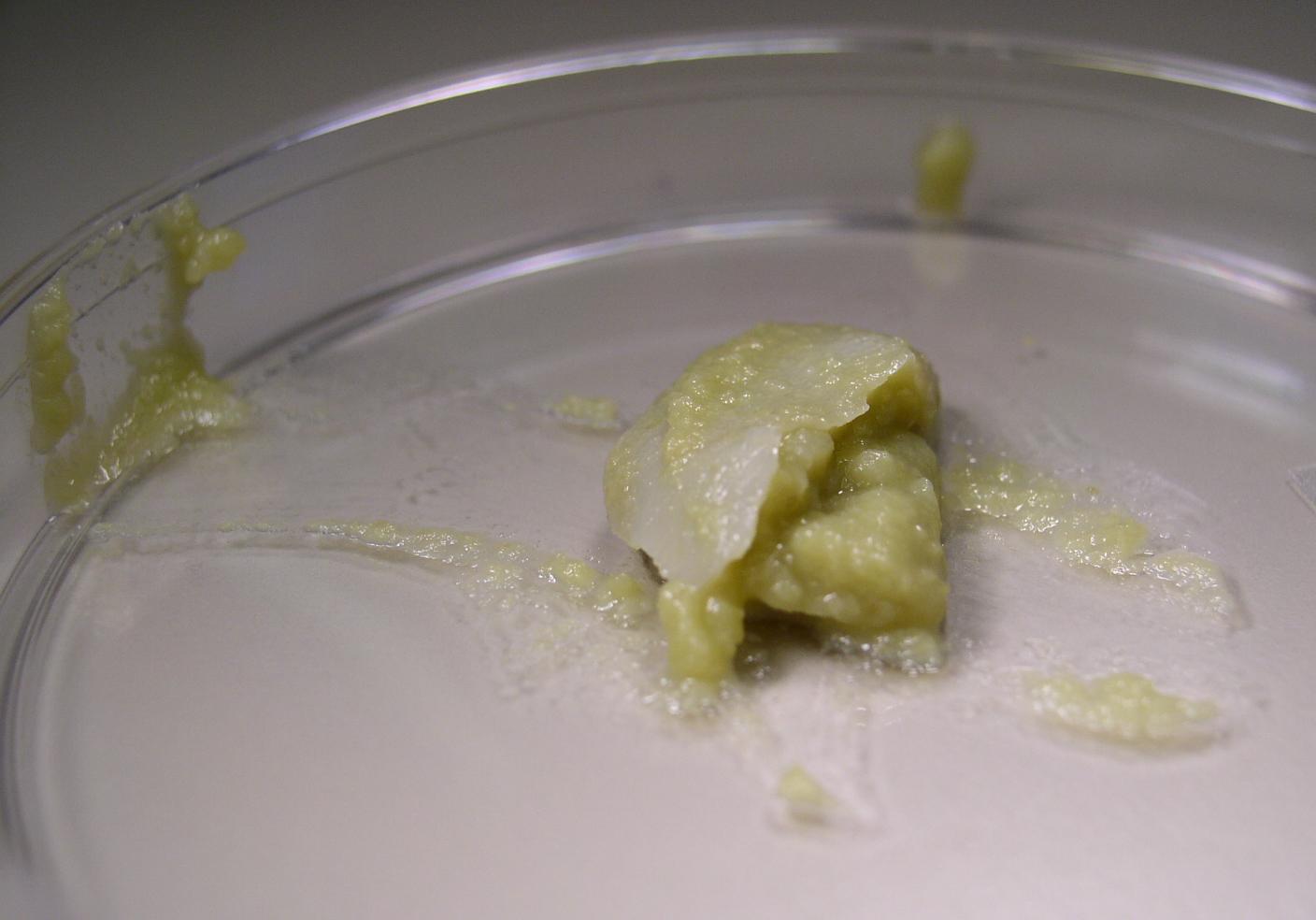
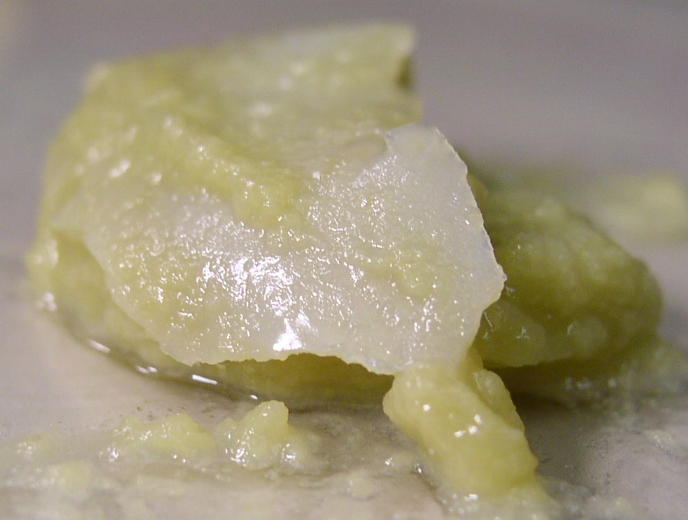
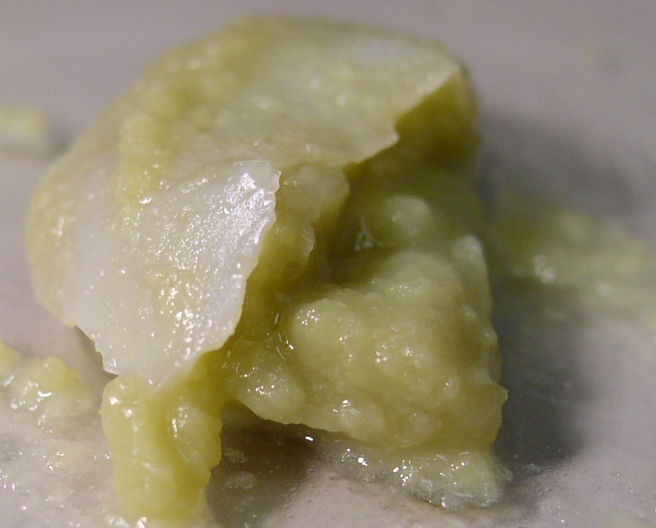
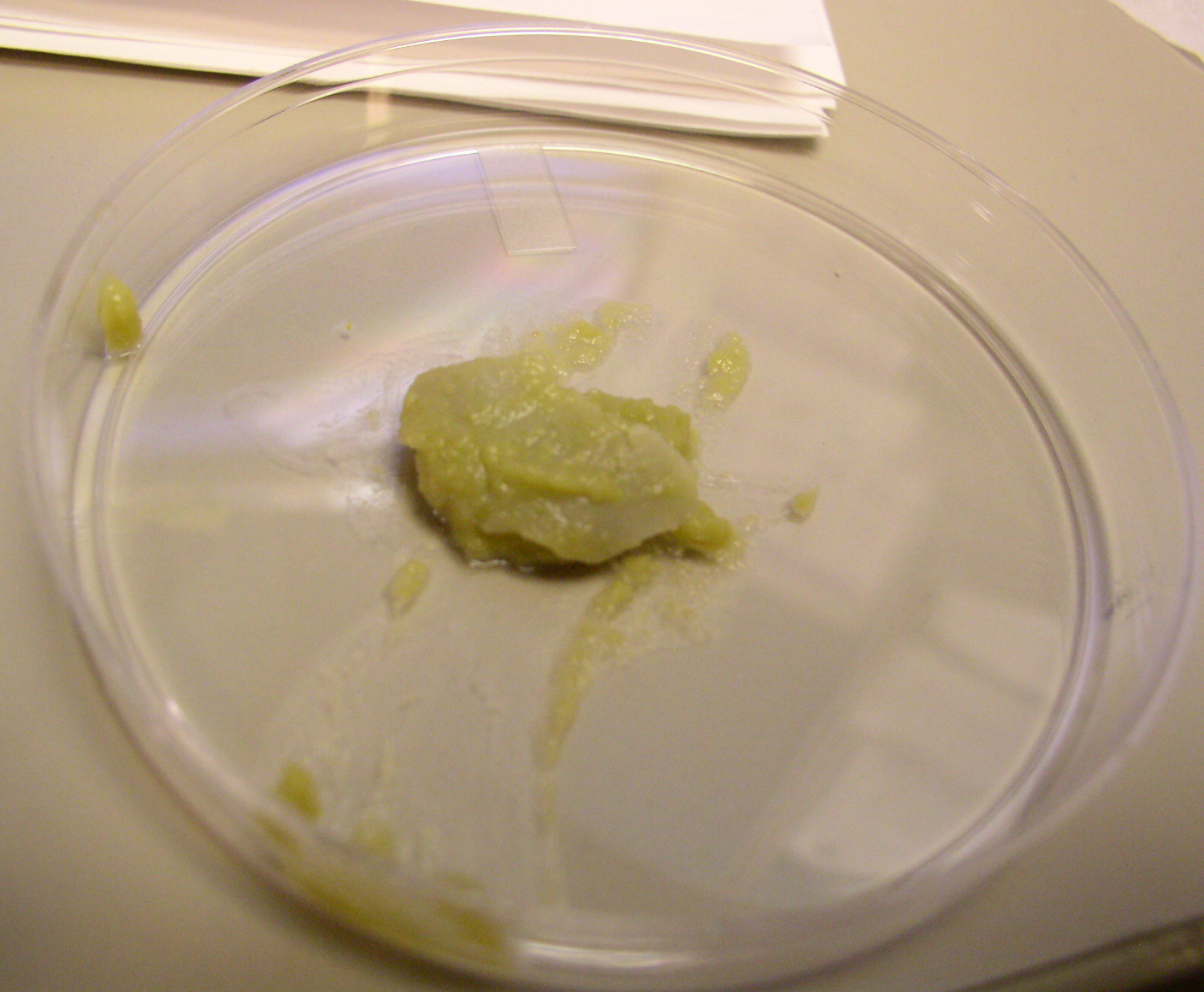
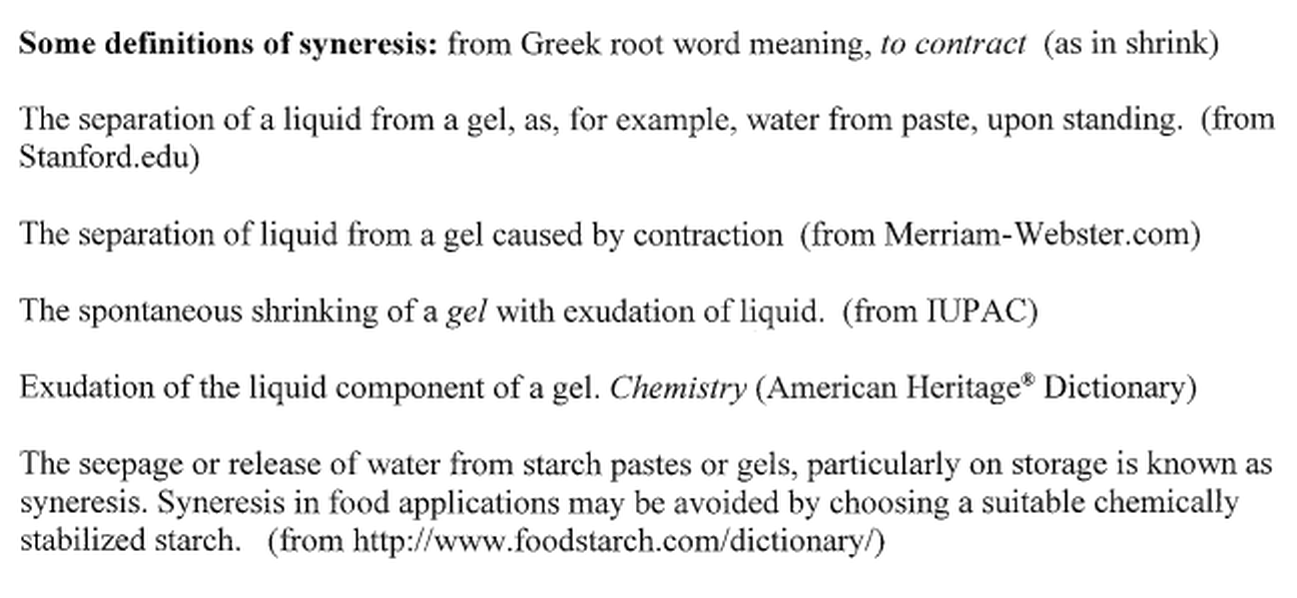
A white-gray substance was on the surface of the product. Microbiology testing found no growth, and no bacteria, yeast or mold by direct microscopic exam (Gram stain, etc). Their testing protocol SOP says to put aside a reserve sample in a sterile 100 mL specimen cup, and the new tech dutifully filled the cup. By the time it was my turn to look at the samples, the jars were mostly empty and the surface material was gone. Fortunately an alert veteran worker in that section put a representative sub-sample in a Petri dish and brought it to me. My first impression was that it was a layer of fat that separated and rose to the top. However, it did not dissolve in non-polar solvents, and the nutrition label said there is zero fat, so it wasn’t fat or grease. I put it in a freezer overnight to help separate the white-gray material from the green pea mush. While removing some with a stainless steel spatula, the sound and feel of ice crystals was noted. Chemical exam of both the green and white-gray material showed no contaminants and no other unusual chemicals. It was mostly water. Further study showed that this is syneresis (definitions given below), where a pasty solid material contracts, exuding some liquid. It is not known why these bottles developed this (minor) defect, while millions of other jars were normal. The storage and transportation history of these jars after leaving the plant was not available. One reference said the addition of a suitable stabilized starch can help prevent this (over a wide range of various food products). The product label lists only 2 ingredients, peas and water. Kudos to Gerber’s for not having dozens of ingredients and additives here.
Band-Aid in lasagna
acetaldehyde smell from plastic water bottle
mold on chocolate?
broken glass or calcium carbonate crystals?
mold pellicles (mushroom-size and texture)
solvent odors
High levels of pesticides in Coke/Pepsi etc in India ~2005
soapy taste – can come from increased free fatty acids, especially lauric acid from coconut
black specks in powdered infant formula
chloroform in a hot morning shower (chlorinated tap water issue)
droppings (suspected)
 Dan Harring (54)