Below are examples from the second half of my career after I got a digital camera (starting 1999). Also see “Crystals – susceptible foods that may develop crystal deposits”

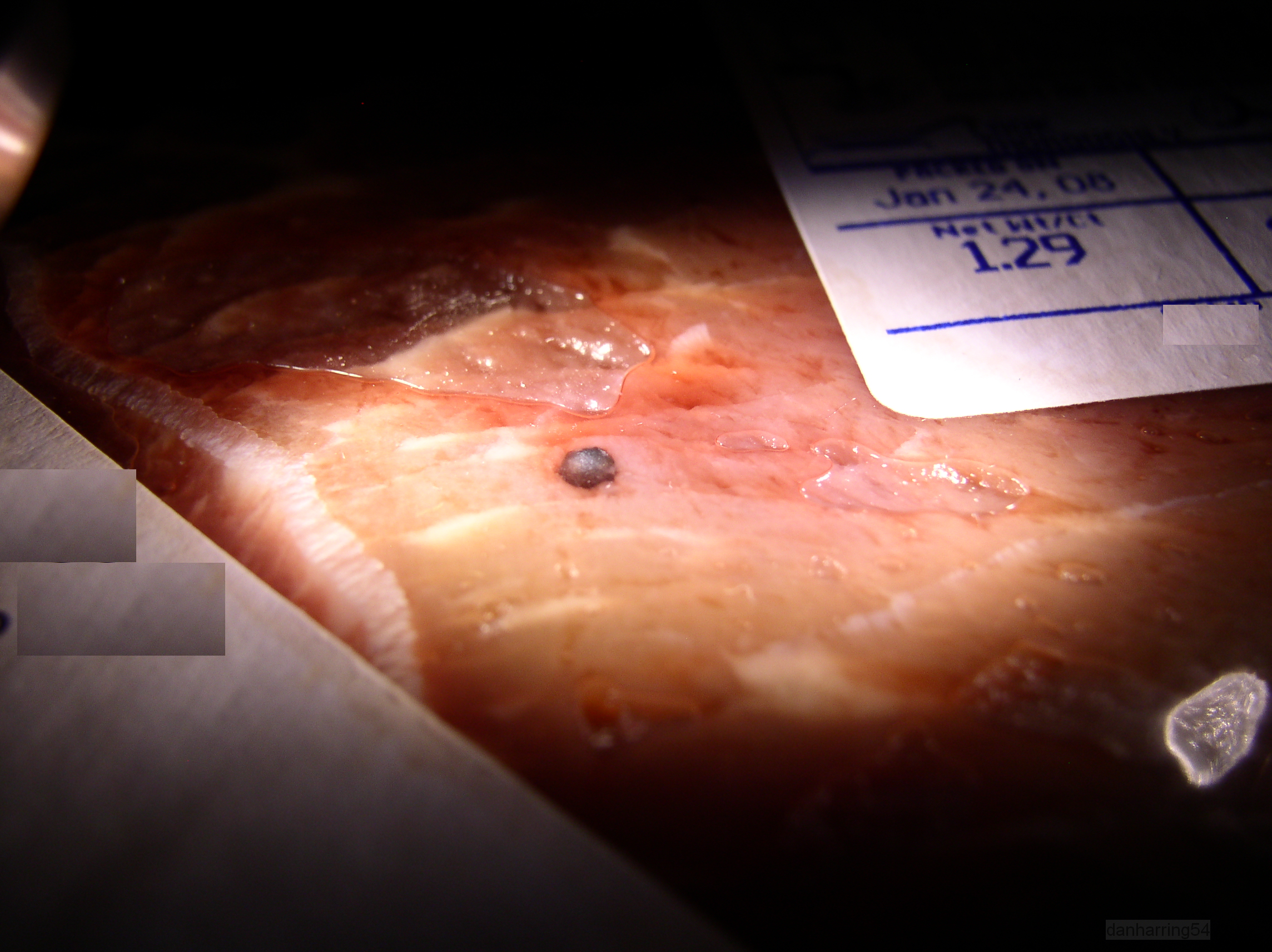
Glass – two characteristics of broken glass make it fairly easy to ID or rule out.
Conchoidal fracture breakage pattern, not an orderly crystalline structure (conchoidal = shaped like a seashell)
Density – with silicon and the metallic additives, it’s significantly heavier than plastics and the carbon-based material normally present in living tissue (it’ll sink like a rock in water and in denser fluids like chloroform & carbon tetrachloride).
Advanced techniques are available to further characterize the properties and origin of broken glass, such as refractive index. The brown or green color of some beer bottles is an obvious marker to compare to sources in the immediate vicinity of the incident. Estimating the radius of broken off curved pieces from the top of jars or bottles can help narrow down the source.
Droppings, pellets, excreta
Bone chips in ground beef, olive pit fragments, stiff sharp bay leaves in pea soup, Seed & peel fragments. Mouth sensitivity after pineapple
Small chips of plastic – how to ID without an IR
 Dan Harring (54)